
manual transmission gearbox problems
Manual Transmission Gearbox Problems: A Comprehensive Overview (Updated December 20, 2025)
Manual transmissions, while durable, exhibit issues like gear popping, shifting difficulties, noise, grinding, and clunking; lubrication, clutch, and mechanical failures are
common.
Manual transmissions, celebrated for their driver engagement and mechanical simplicity, aren’t immune to problems. These issues can range from minor annoyances, like difficulty selecting a gear, to significant mechanical failures requiring extensive repairs. Understanding the potential pitfalls is crucial for any driver or mechanic. Common complaints include gears popping out, often into neutral, especially during acceleration or deceleration.
A noisy transmission in neutral, grinding or juddering during shifts, and clunking or rattling sounds are also frequent indicators of underlying problems. Often, these symptoms point to issues with synchronization, lubrication, or the clutch system. Ignoring these early warning signs can lead to more substantial and costly damage, potentially resulting in complete transmission failure. Proactive maintenance and prompt attention to these issues are key to extending the life of your manual gearbox.
Common Manual Transmission Problems
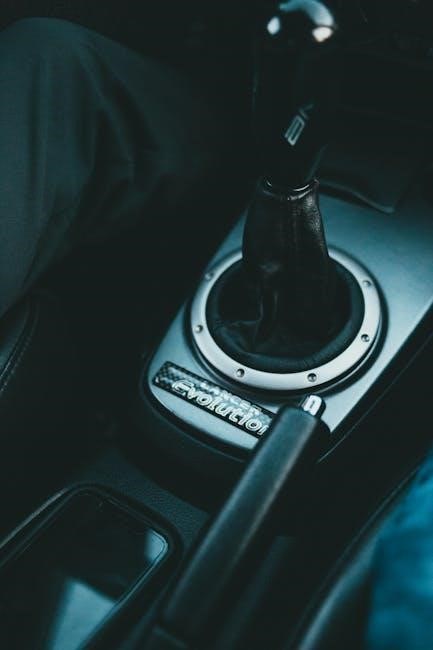
Frequently reported issues include gear popping, shifting difficulties, unusual noises, grinding sensations, and clunking sounds, often linked to lubrication or clutch malfunctions.
Gear Popping Out (Jumping Gears)
Gear popping out, or jumping into neutral, is a common manual transmission issue, often occurring while driving or during acceleration. This frustrating problem typically indicates wear or damage within the transmission’s internal components. Specifically, worn synchronizer rings are frequently the culprit, failing to properly mesh the gears.
A failing synchronizer doesn’t slow the gears to the correct speed for a smooth engagement, leading to the gear disengaging under load. Shift forks, responsible for moving the gears, can also become bent or damaged, contributing to this issue. Sometimes, excessive play in the shift linkage can also cause gears to pop out, requiring adjustment or replacement of worn components. Addressing this promptly prevents further damage and ensures safe operation.
Difficulty Shifting Gears
Difficulty shifting gears in a manual transmission manifests in several ways, ranging from a general stiffness to an inability to select a gear at all. A primary cause is often a failing clutch master cylinder, preventing full disengagement of the clutch. Severed or damaged shift linkage wires also contribute significantly, disrupting the mechanical connection between the shifter and the transmission;
Internal transmission issues, like worn synchronizer rings, can also make shifting challenging, requiring excessive force or resulting in grinding noises. Low or contaminated gear oil increases friction, exacerbating the problem. Double engagement or issues with gear selection are also common symptoms. Proper diagnosis is crucial, as the root cause can vary widely, impacting repair costs and complexity.
Noisy Transmission in Neutral
A noisy transmission in neutral often indicates internal wear within the gearbox. While some minor noise is normal, persistent whining, humming, or clicking sounds warrant investigation. Frequently, the issue stems from worn bearings – specifically, the input shaft bearing – which can create noticeable noise even when no gear is engaged.
Insufficient or degraded gear oil can exacerbate these sounds, as it reduces lubrication and increases friction between moving parts. In some cases, damage to the gears themselves can contribute to the noise. It’s important to differentiate between transmission noise and other potential sources, such as the throw-out bearing. Ignoring this symptom can lead to more significant and costly repairs down the line.
Grinding or Juddering During Shifts
Grinding or juddering during shifts is a clear sign of synchronization issues within the manual transmission. This typically occurs when the synchronizer rings, responsible for matching the speeds of the gears before engagement, are worn or damaged. A failing synchronizer prevents a smooth gear change, resulting in a harsh grinding sensation.
The issue can also be linked to a lack of sufficient lubrication, hindering the synchronizers’ ability to function correctly. Attempting to force a shift into gear when the speeds aren’t matched will accelerate wear on these components. Juddering, a vibrating sensation, can indicate warped clutch components or internal transmission damage. Prompt diagnosis and repair are crucial to prevent further damage to the gears and transmission housing.
Clunking and Rattling Sounds
Clunking and rattling sounds emanating from the manual transmission often indicate loose or worn internal components. These noises are frequently associated with excessive play in the gears, shift forks, or linkages. A noticeable clunk when shifting gears suggests significant wear or damage to the synchronizers or gear teeth themselves.
Rattling sounds, particularly in neutral, can stem from worn internal bearings or damaged gear sets. In some cases, a loose or broken shift linkage can also contribute to these noises. Ignoring these sounds can lead to more severe mechanical failures, potentially requiring a complete transmission rebuild. Thorough inspection of the internal components is essential to pinpoint the source of the noise and prevent further deterioration.
Specific Mechanical Failures
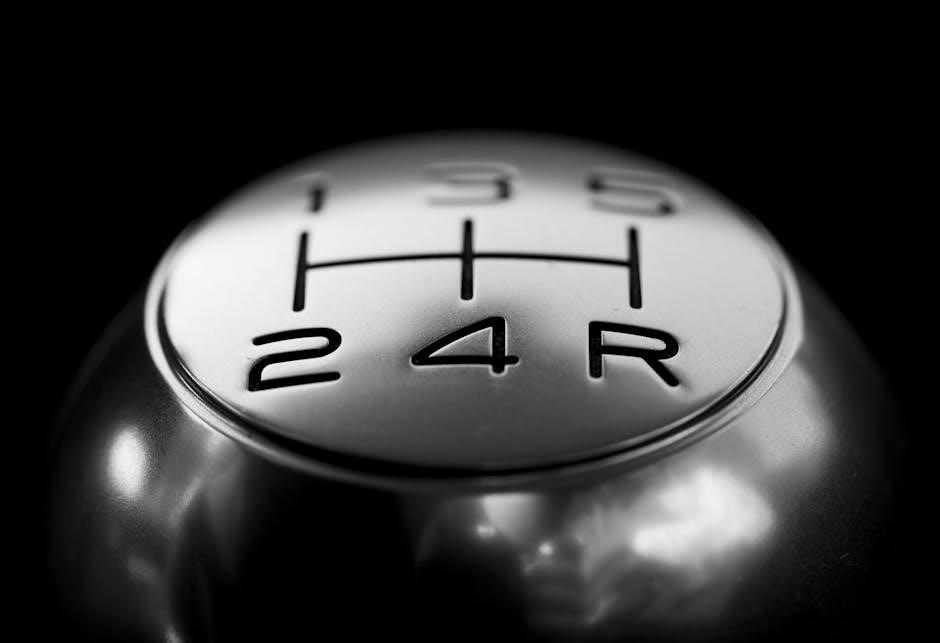
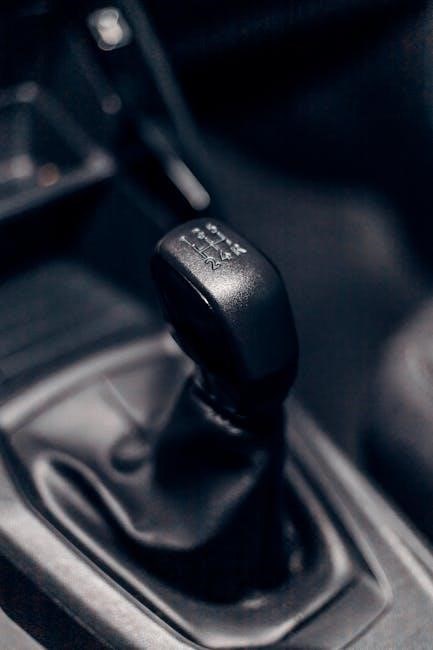
Mechanical failures encompass synchronizer ring issues, damaged shift forks, bent linkage, clutch master cylinder problems, and internal bearing failures within the gearbox.
Synchronizer Ring Failure
Synchronizer rings are crucial for smooth gear engagement, and their failure is a frequent mechanical issue in manual transmissions. These rings work by matching the speed of the gear being selected with the main shaft speed, preventing grinding. When they wear or become damaged, you’ll often experience difficulty shifting, particularly into specific gears, accompanied by a noticeable grinding or scratching sound.
The rings may fail due to normal wear and tear over time, aggressive shifting habits, or insufficient lubrication. A failing synchronizer doesn’t always prevent gear engagement, but it makes the process rough and noisy. Eventually, complete failure will render a gear unusable without significant force, potentially damaging other transmission components. Replacement typically requires a transmission disassembly and inspection of related parts.
Worn or Damaged Shift Forks
Shift forks are vital components responsible for physically moving the gears into engagement within the transmission. Constructed from metal, they are subjected to considerable stress with each gear change. Over time, or due to forceful shifting, these forks can become bent, worn, or even broken. Damage to shift forks often manifests as difficulty selecting certain gears, or a feeling of looseness in the shifter mechanism.
A worn shift fork may not fully engage the gear, leading to popping out of gear or a sensation of missed shifts. Inspecting shift forks requires transmission disassembly. Replacement is necessary when damage is detected, and it’s often recommended to replace forks in pairs, as wear on one usually indicates similar wear on others; Ignoring this issue can lead to further internal damage.
Bent or Broken Shift Linkage
Shift linkage connects the gear shifter in the cabin to the transmission itself, translating driver input into gear changes. This system, comprised of rods, cables, or a combination of both, is susceptible to damage from road debris, corrosion, or physical impact. A bent or broken component within the linkage prevents the transmission from accurately receiving shift commands.
Symptoms include difficulty selecting gears, a loose or sloppy shifter feel, and in severe cases, the inability to shift at all. A severed linkage wire, as noted, is a primary reason gears won’t engage. Inspection involves visually checking the linkage for bends, breaks, or loose connections. Repair typically involves replacing damaged components, ensuring proper adjustment for smooth and precise shifting. Neglecting this can cause significant drivability issues.
Clutch Master Cylinder Failure
The clutch master cylinder is a crucial component in hydraulically-actuated clutch systems, responsible for creating the pressure needed to disengage the clutch. Failure often stems from internal leaks, caused by worn seals or corrosion within the cylinder bore. This leads to a gradual or sudden loss of clutch pedal feel and the inability to properly disengage the clutch for smooth gear changes.
A common symptom is a spongy pedal that travels to the floor without engaging the clutch. As highlighted, a failed master cylinder is a primary reason gears won’t engage. Air entering the hydraulic system exacerbates the problem. Diagnosis involves checking for leaks and testing the cylinder’s output pressure. Replacement of the master cylinder, along with bleeding the hydraulic line, is typically required to restore proper clutch function and shifting capability.
Internal Bearing Failures
Internal bearing failures within a manual transmission often manifest as a progressively worsening, whining or growling noise, particularly noticeable during acceleration or deceleration. These bearings support the various shafts and gears, and when they degrade, increased play develops, leading to noise and eventual component damage. Lack of proper lubrication significantly accelerates bearing wear.
Common failure points include the input shaft bearing, output shaft bearing, and countershaft bearings. As bearings deteriorate, metal particles contaminate the gear oil, further exacerbating the problem. Diagnosis typically involves careful listening to pinpoint the source of the noise and, in more severe cases, transmission disassembly for inspection. Repair necessitates replacing the failed bearings and thoroughly flushing the transmission to remove metallic debris, often requiring a complete rebuild.
Lubrication Related Issues
Insufficient or incorrect gear oil, or contamination, causes significant wear, impacting synchronizers, bearings, and gears, leading to grinding, noise, and ultimately, transmission failure.
Lack of Lubrication
A critical failure point for manual transmissions is insufficient lubrication. Gear oil isn’t merely a coolant; it forms a vital protective layer between moving parts, reducing friction and wear. When levels are low, metal-to-metal contact occurs, rapidly accelerating damage to gears, bearings, and synchronizers.
This lack of lubrication manifests as increased noise – whining, grinding, or even clunking – especially during gear changes. Over time, the transmission will become increasingly difficult to shift, and eventually, complete failure is inevitable. Regular checks of the gear oil level, and prompt top-ups when needed, are essential preventative measures. Ignoring this can lead to extremely costly repairs or a complete transmission replacement.
Furthermore, leaks should be addressed immediately to prevent ongoing oil loss and subsequent damage.
Incorrect Lubrication Type
Using the wrong gear oil can be as detrimental as having no oil at all. Modern manual transmissions often require specific oil formulations – typically GL-4 or GL-5 – designed to protect the materials used in their construction. Older transmissions may require different specifications.
Employing an incompatible oil, such as using GL-5 in a transmission designed for GL-4, can cause corrosion of the brass synchronizer rings, leading to difficulty shifting and eventual synchronizer failure. Conversely, using an oil with insufficient additives may not provide adequate protection under heavy loads.
Always consult your vehicle’s owner’s manual or a trusted mechanic to determine the correct gear oil specification for your specific transmission model. Using the proper lubricant is a simple, yet crucial, step in maintaining transmission health.
Contaminated Gear Oil
Gear oil degradation occurs over time, but contamination significantly accelerates this process. Moisture, metal particles from wear, and debris from damaged components can all infiltrate the transmission oil. Water ingress leads to corrosion, while metal particles act as abrasives, scoring gear surfaces and bearings.
This contamination reduces the oil’s lubricating properties, increasing friction and heat. The resulting wear exacerbates the problem, creating a vicious cycle. Symptoms include increased noise, difficulty shifting, and ultimately, transmission failure.
Regular gear oil changes are vital to remove contaminants. Inspecting the drained oil for metal shavings or a milky appearance (indicating water contamination) can provide early warning signs of internal issues. Addressing contamination promptly can prevent costly repairs.
Clutch Related Problems Affecting Transmission
Clutch issues—improper release, worn discs, or air in hydraulic systems—directly impact transmission function, causing shifting problems and potential internal damage to gears.
Improper Clutch Release
Improper clutch release manifests as difficulty engaging or disengaging gears, often stemming from issues within the clutch linkage or hydraulic system. A failing clutch master cylinder, as noted, is a primary culprit, preventing full disengagement. This incomplete separation means the transmission gears aren’t fully freed, leading to grinding during shifts or an inability to select a gear at all.
Adjustments to the clutch cable (in cable-operated systems) or bleeding the hydraulic line (in hydraulic systems) can sometimes resolve the issue. However, persistent problems often indicate internal wear within the master or slave cylinder, necessitating replacement. Ignoring improper release puts undue stress on synchronizers and gears, accelerating wear and potentially causing more significant, costly transmission damage over time.
Worn Clutch Disc
A worn clutch disc significantly impacts manual transmission operation, even though it’s technically part of the clutch system. As the friction material wears down, the clutch begins to slip, meaning the engine’s power isn’t fully transferred to the transmission. This slippage generates excessive heat and can cause erratic engagement, making smooth gear changes difficult. Drivers may notice higher engine RPMs without a corresponding increase in vehicle speed.
Ultimately, a severely worn disc prevents complete clutch engagement, leading to grinding or an inability to shift. While not a direct transmission failure, it mimics symptoms and accelerates wear on internal transmission components. Replacement of the clutch disc, pressure plate, and throw-out bearing is typically recommended as a complete clutch kit to ensure optimal performance and longevity.
Air in the Hydraulic Clutch System
Air within the hydraulic clutch system compromises the transfer of force from the pedal to the clutch fork, resulting in a spongy or soft pedal feel. This air presence reduces hydraulic pressure, making it difficult to fully disengage the clutch, and consequently, challenging to shift gears smoothly. Symptoms include difficulty getting into first or reverse gear, and a noticeable delay in clutch engagement;
Air can enter the system through leaks in the lines, master cylinder, or slave cylinder. Bleeding the hydraulic system – removing the trapped air – is crucial to restore proper clutch operation. Ignoring this issue can lead to complete clutch failure and potential damage to transmission components due to forced gear engagement attempts. Regular inspection and maintenance of the hydraulic system are vital.
Less Common, But Significant Issues
Less frequent problems include warped flywheels, case housing damage, and differential issues in integrated transmissions, demanding specialized diagnosis and repair expertise.
Warped or Damaged Flywheel
A warped or damaged flywheel significantly impacts manual transmission performance, often manifesting as clutch slippage, shuddering during engagement, and difficulty shifting. This occurs because the flywheel provides a flat, smooth surface for the clutch disc to engage with; any distortion disrupts this crucial contact.
Causes include overheating from aggressive driving, improper installation, or physical impact. Severe damage can lead to cracked flywheels, creating dangerous vibrations and potential component failure. Diagnosis typically involves visual inspection for cracks or warping, often confirmed with a dial indicator to measure runout;
Repair usually necessitates flywheel resurfacing or, in cases of severe damage, complete replacement. Ignoring a damaged flywheel can accelerate clutch wear and potentially cause further transmission damage, leading to costly repairs down the line.
Case Housing Damage
Damage to the transmission case housing represents a serious issue, often stemming from significant impacts – like hitting road debris or involvement in a collision. Cracks or fractures in the housing compromise the structural integrity of the entire transmission, potentially leading to gear oil leaks and internal component misalignment.
Even seemingly minor cracks can propagate under stress, exacerbating the problem. Symptoms include noticeable oil puddles, unusual noises emanating from the transmission, and difficulty shifting. Diagnosis requires a thorough visual inspection, potentially aided by dye penetrant testing to reveal hairline fractures.
Repair options are limited; welding may be possible for small cracks, but complete case replacement is frequently the only viable solution for substantial damage. Ignoring case housing damage risks catastrophic transmission failure and further vehicle damage.
Differential Problems (Integrated Transmissions)
Integrated transmissions, combining the gearbox and differential into a single unit, present unique challenges when differential issues arise. Common problems include worn or broken gears within the differential, bearing failures, and issues with the limited-slip mechanism (if equipped). These problems manifest as whining noises, particularly during acceleration or cornering, and vibrations.
Diagnosing differential problems requires skilled technicians and specialized tools. Symptoms can mimic other transmission issues, making accurate identification crucial. Repairing an integrated unit is often more complex and expensive than servicing a separate differential.
Complete unit replacement is frequently necessary, as internal differential repairs can be difficult and may not be cost-effective. Ignoring differential problems can lead to complete transmission failure and potential damage to other drivetrain components.
Preventative Maintenance for Manual Transmissions
Regular maintenance is crucial for extending the life of a manual transmission. Fluid checks and changes are paramount; use the manufacturer’s recommended gear oil and change it at the specified intervals – typically every 30,000 to 60,000 miles. Inspect for leaks and address them promptly.
Clutch cable or hydraulic system inspections should be part of routine service. Ensure proper clutch engagement and address any signs of slippage or difficulty shifting. Shift linkage should be checked for wear and proper adjustment.
Avoid harsh shifting and “speed shifting” which puts undue stress on internal components. Smooth, deliberate shifts contribute significantly to longevity. Proactive maintenance prevents costly repairs and ensures reliable performance.